
Journal2 min read
Practising Yoga in Nature: Why Landscape Matters
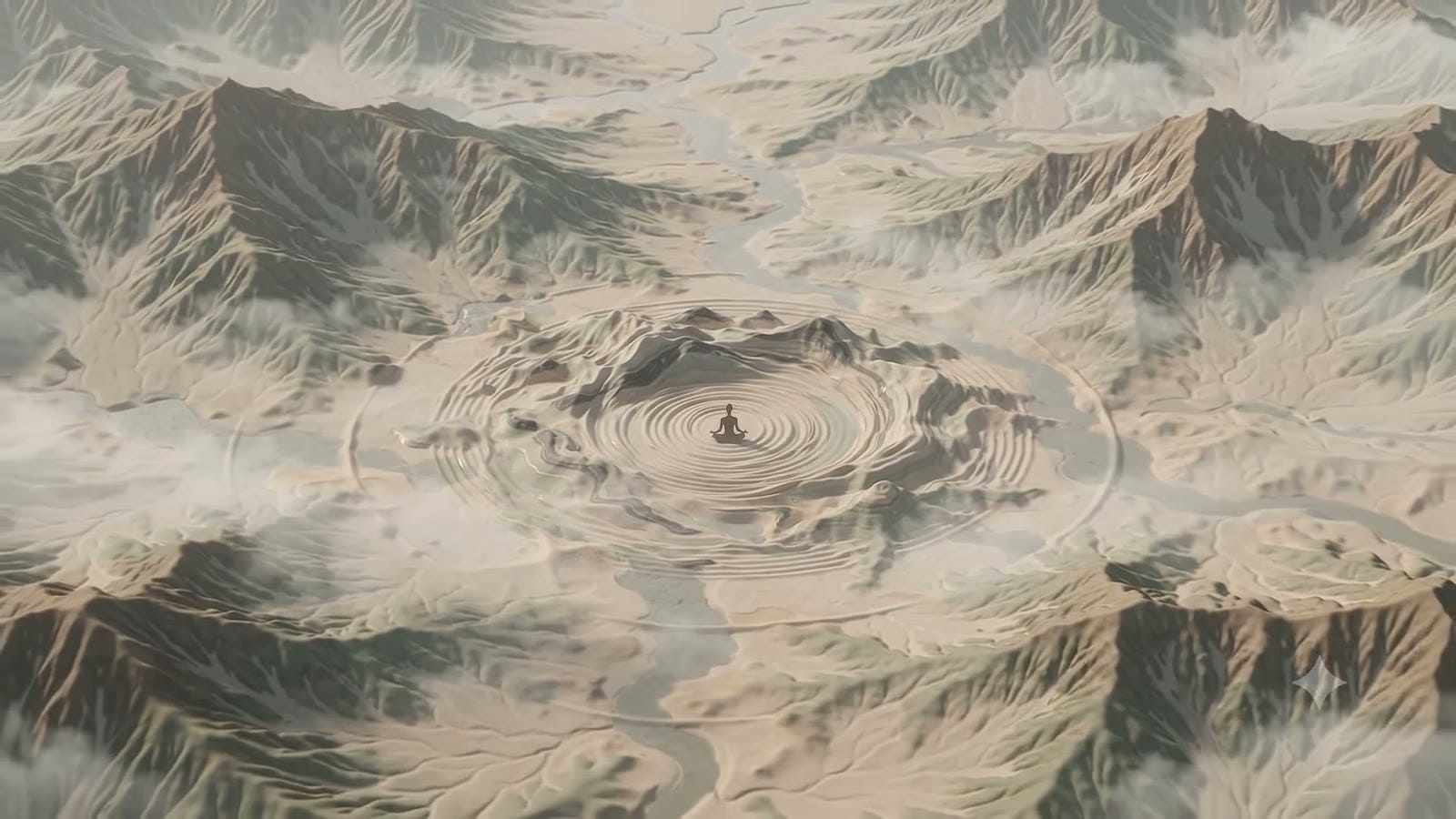
Some of the oldest yogic teachings come from the forest. The Aranyakas, "forest texts", were composed for those who had withdrawn from village life to study and meditate. The Himalaya has drawn yogis for centuries. The tradition has always understood that where you practise affects how you practise.
What changes outdoors
Indoors, attention tends to stay close: the mat, the body, the next instruction. Outdoors it widens. The sound of water, wind in trees, the distance of a horizon: none of these ask anything of you, and so the mind has less to hold on to.
This is close to what Patanjali calls pratyahara, the drawing inward of the senses. It is easier to let the senses rest when what surrounds them is quiet and unhurried.
The body in a landscape
Walking on uneven ground asks the ankles, knees and hips to adjust constantly, and the breath to find its own pace on a climb. After a day on the hills, a slow evening practice meets a body that has already been working in a natural way, and many people find they settle into stillness more easily.
Why we build retreats around places
Our retreats are chosen for their landscape as much as their comfort. In the Austrian Alps, we practise facing the Dachstein mountains and spend the days walking. In North Goa, the Arabian Sea is part of the day. Our next retreat, in North Wales, is coming soon.
Bringing it home
You do not need a retreat to practise in nature. A few suggestions:
- Sit outside for ten minutes before the day begins. No technique, just listening.
- Take one walk a week without headphones, at a pace that lets the breath stay easy.
- If you can, practise a few postures on grass rather than a floor, and notice what the uneven ground asks of you.
Read more about our retreats on our retreats page.
Study this furtherOur upcoming retreat in North Wales