Journal5 min read
Do I need to be flexible to train as a yoga teacher?
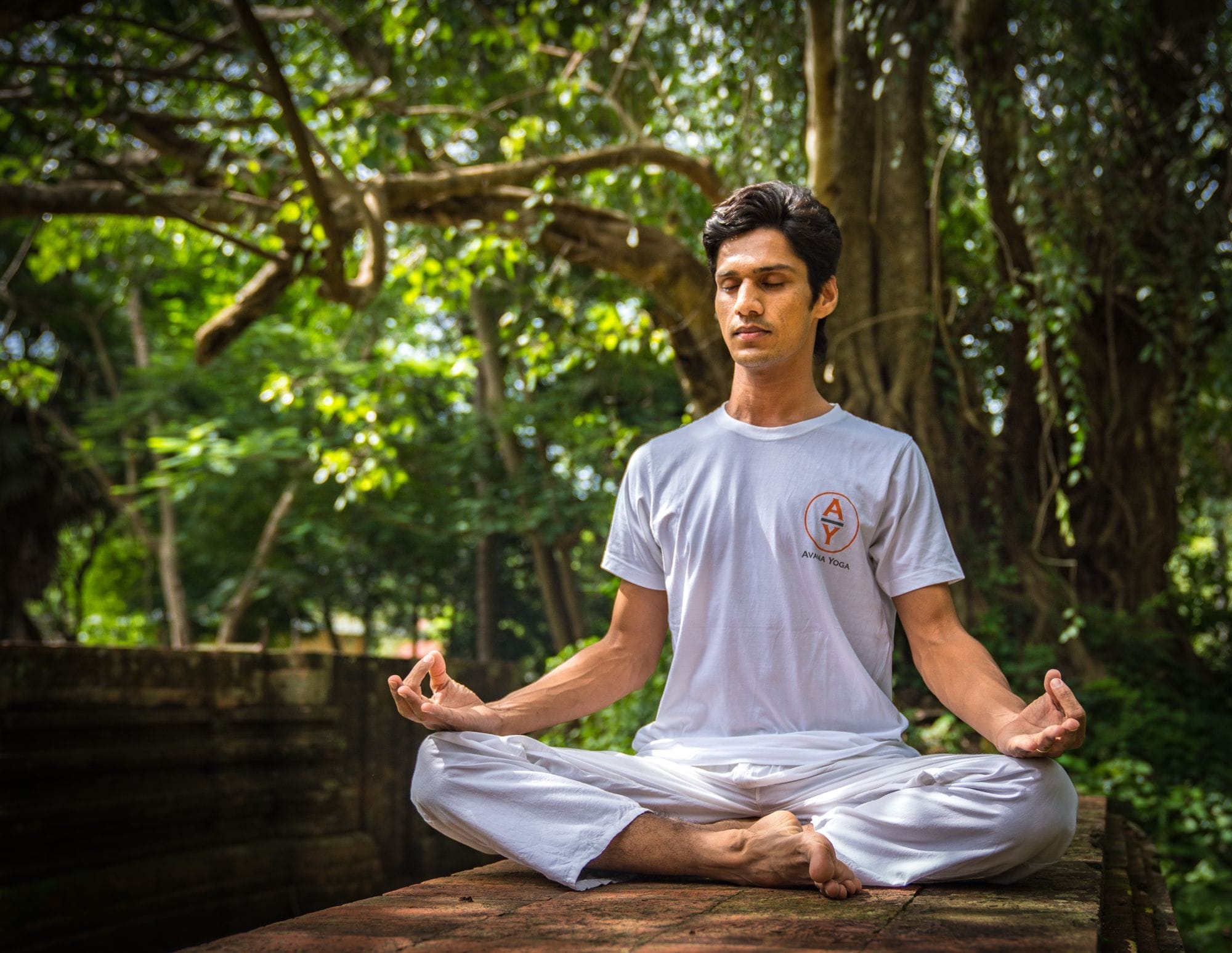
Many people thinking about teacher training carry the same worry, and they tend to mention it last, almost apologetically. I can’t touch my toes. I’m not very flexible. Will that matter?
It will not stop you training, and it will not stop you teaching. The reason lies in what the tradition asks of a posture, which is far less than the photographs suggest.
What Patanjali says about posture
The Yoga Sutras of Patanjali, the text at the centre of classical yoga, has 196 short aphorisms. Three of them deal with posture.
The first, sutra 2.46, reads sthira sukham asanam. Asana, the seat or posture, should be sthira, steady, and sukha, easeful. That is the whole definition. There is no mention of depth, of legs behind the head, of how far forward you fold.
The next two sutras say how the posture is refined, by letting go of excess effort and resting the attention on something boundless, and what it gives in return: the practitioner is no longer thrown about by the pairs of opposites, heat and cold, pleasure and pain.
For Patanjali, posture is preparation. It exists so that you can sit still long enough for breath and meditation to begin. A stiff body that sits steadily meets his definition. A supple body that fidgets does not.
The Hatha texts say the same
The Hatha Pradipika, the fifteenth-century manual of Hatha yoga compiled by Svatmarama, gives asana far more space than Patanjali does, and it says why. Posture, it tells us in the first chapter, brings steadiness, health and lightness of body.
A few verses later it names who can succeed in yoga: the young, the old, the very old, even the sick and the weak, provided they practise with diligence. It says nothing about the naturally supple.
Across both texts the condition is the same. Practise regularly. Flexibility is not on the list.
What anatomy adds
Modern anatomy explains why the texts were wise not to demand it. Range of motion depends partly on soft tissue: muscle, fascia and the connective tissue around each joint. That responds to regular practice. Hamstrings lengthen over months. Shoulders that have spent years over a keyboard open slowly.
It also depends on bone. The depth and angle of the hip socket, the shape of the top of the thigh bone, the proportions of the spine and limbs all vary from person to person, and no amount of practice will change them. Two students can work equally hard in paschimottanasana, the seated forward bend, and finish in very different shapes, each of them right for that body.
A training that treated flexibility as the goal would be asking some people for something their skeletons cannot give.
What a teacher actually needs
Stand at the front of a full room and the shape of your own forward bend becomes almost irrelevant. Nobody is copying it closely. They are listening to you, and you are watching them.
That watching is the real skill. Seeing what is happening in a student’s posture, and knowing how to help, sits at the centre of the 200-Hour Yoga Teacher Training, alongside sequencing a balanced class, giving clear instruction, applying the principles of alignment to different bodies, and the philosophy that explains why any of it matters.
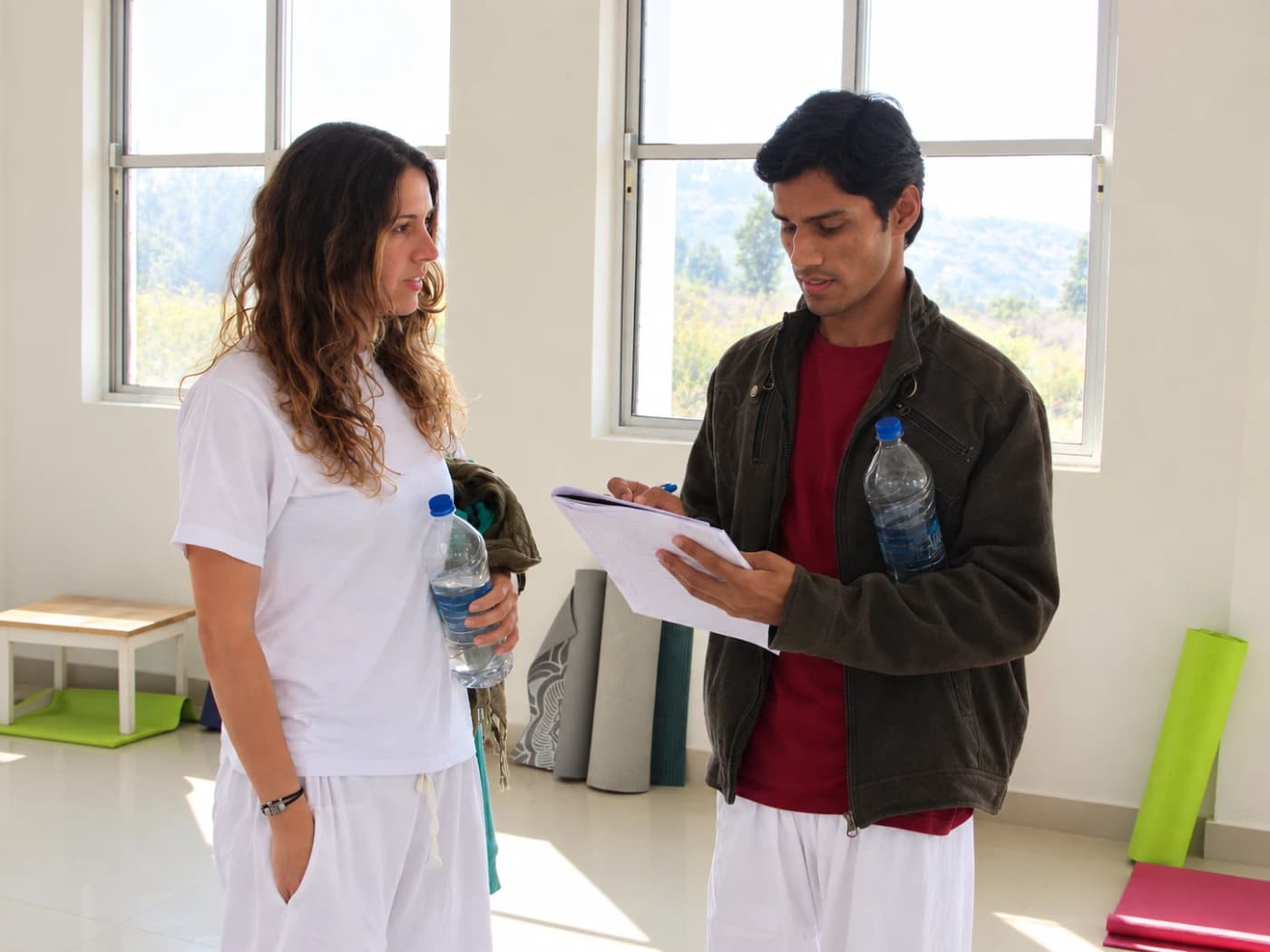
Here a stiff body is often an advantage. If you have had to find your way into a posture slowly, you understand the student at the back who cannot reach the floor, because you have been that student. You know which instruction helps and which one only produces strain. Teachers who were always flexible sometimes have to learn this from the outside.
What the training does ask of you
None of this makes teacher training easy. It is demanding, and it is better to say so plainly.
Our 200-Hour training runs over ten weekends in Rhyl, North Wales, on Saturdays and Sundays from 12pm to 6pm, with two live philosophy sessions each week. There are written and practical assessments at the end, and you need to attend at least 90% of the course to graduate.
What it asks for is a personal yoga practice you already keep, an open mind and a willingness to learn. Stamina matters more than range. Six hours of practice and study on consecutive days is a real physical commitment, whatever your hamstrings are doing.
If you are unsure whether you are ready, ask us. It is a better question than whether you can touch your toes.
A practice for this week
Take the first sutra on posture and test it for yourself.
- Fold a blanket two or three times and sit on its edge, legs crossed.
- Let the knees come towards the floor. If they sit well above the hips, add another fold.
- Lengthen the spine, let the shoulders drop, and rest the hands on the knees.
- Stay for ten minutes, breathing through the nose.
Every minute or so, ask two questions. Is this steady? Is this easeful? Where the answer is no, change the height of the blanket or the position of the legs, not the effort.
By the end you will have found a posture that meets Patanjali’s definition exactly. You did not need to be flexible to find it.
If you would like to study these texts and learn to teach from them, read more about the 200-Hour Yoga Teacher Training.
Study this furtherThe 200-Hour Yoga Teacher Training