Journal5 min read
How to choose a yoga teacher training in the UK
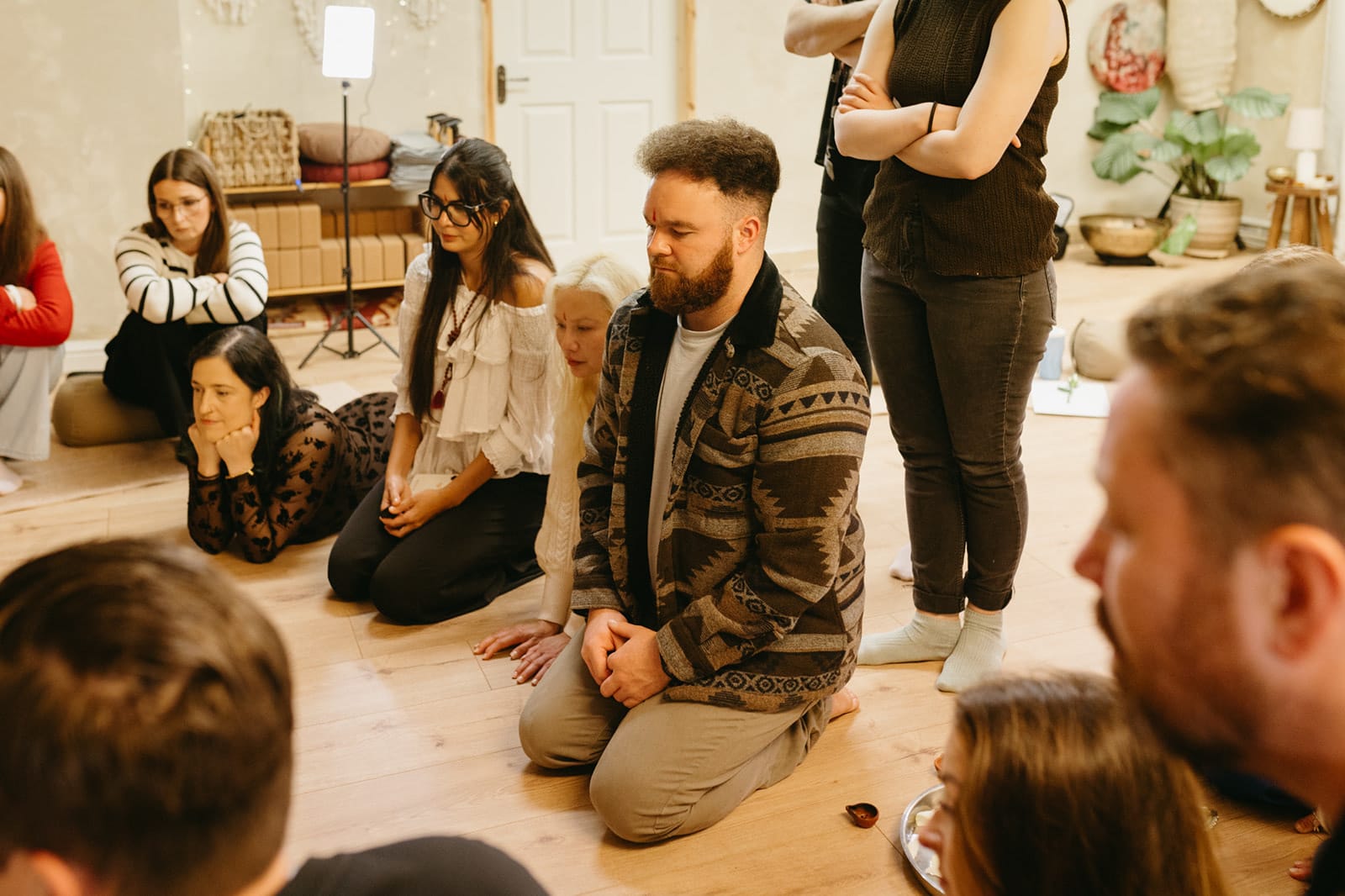
Most people choose a yoga teacher training the way they choose a holiday: by the photographs, the price and the dates. Those things matter. They are also the least useful way to tell one course from another, because almost every course has good photographs, a similar price and dates that roughly suit.
What separates them is harder to see from a brochure. Here is what to look for, and the questions that bring it out.
Start with what the certificate actually means
There is no single legal licence to teach yoga in the UK. What you earn is a training certificate, and its value depends on who recognises it.
The name you will see most often is Yoga Alliance, an international registry based in the United States. Schools that meet its standards are listed as Registered Yoga Schools, and graduates of a registered 200-hour course can register as an RYT 200, a Registered Yoga Teacher. In the UK you will also come across the British Wheel of Yoga and Yoga Alliance Professionals, which set their own standards.
Two practical points follow. Check that the school is registered with the body it names, which takes a minute on that body’s website. And find out what the certificate leads to next: a 200-hour training is the foundation, and further study builds on it. A 200-hour and a 300-hour training together count towards Yoga Alliance’s RYT 500.
Weekends or an intensive
Teacher trainings in the UK come in two shapes. An intensive packs the hours into three or four weeks, usually residential. A part-time course spreads them over weekends across several months.
An intensive is total immersion, and some people thrive on it. It also means four weeks away from work and home, and a great deal of material absorbed quickly, with little time for it to settle.
A weekend course is slower by design. You practise between weekends, try out what you learned, and arrive at the next one with questions. The cost is stamina: months of Saturdays and Sundays, alongside an ordinary working week.
Neither is better. Choose the one your life can actually hold, because the course you finish is worth more than the one you abandon.
Ask what tradition it comes from
“Yoga teacher training” can mean almost anything, from a fitness qualification with some breathing added to years of study in a lineage. A course rooted in a tradition will say plainly where its teaching comes from.
Look for the texts. Does the course study the Yoga Sutras of Patanjali, the Hatha Pradipika, the Bhagavad Gita? Is philosophy taught as a subject in its own right, or squeezed into an afternoon? Are pranayama, the regulation of the breath, and meditation taught as practices, or mentioned and moved past?
The postures are the visible part of yoga, and any good course teaches them carefully. A training that teaches only the postures has left out most of what you will be passing on.
Find out who is in the room
Two numbers tell you a lot. How many trainees are in a group, and how many of the course hours are taught by the lead trainers rather than guest teachers or recordings?
In a small group the trainers can watch you teach, correct you, and notice when you are struggling. In a large one you are mostly watching others. Ask the school directly, and be wary of an answer that is vague.
Read the small print on attendance and assessment
A serious course asks something of you. Find out how much of it you must attend to graduate, what happens if you miss a weekend, and how you are assessed. Written and practical assessments are a good sign: they mean someone will check that you can actually teach.
Ask about the language of teaching, too. A course delivered in English expects a good understanding of spoken and written English, and it is better to know that before the first weekend.
Count the whole cost
The course fee is rarely the full figure. Add travel to each weekend or the cost of staying away for an intensive, books, and the insurance you will need before you teach a paying class. Ask whether payment plans are available, and when an early rate ends.
Questions to take to any school
- Which body is the school registered with, and what can I register as when I finish?
- What tradition is the teaching rooted in, and which texts do we study?
- How many trainees are in a group, and who teaches most of the hours?
- How much must I attend, and how am I assessed?
- What does the full cost come to, and is there a payment plan?
How our training answers them
Avana Yoga is a Yoga Alliance Registered Yoga School. Our 200-Hour Yoga Teacher Training is rooted in the classical Hatha tradition and taught through its texts. It runs over ten weekends in Rhyl, on the North Wales coast, on Saturdays and Sundays from 12pm to 6pm, with two live philosophy sessions a week that are recorded if you miss one. Groups are small. To graduate you attend at least 90% of the course and complete written and practical assessments, and you can then register with Yoga Alliance as an RYT 200.
The next course starts on 23rd January 2027. The fee is £1899 until 30th November 2026, then £2099, and payment plans are available on request.
Before you decide
Before you compare a single price, write down why you want to train. Not the reason you would give at a party; the one underneath it. Then read each course description with that sentence beside you.
The right course is the one that answers it.
If you are weighing up our course, the full details are on the 200-Hour Yoga Teacher Training page.
Study this furtherThe 200-Hour Yoga Teacher Training